
Will A.I. Take Away Our Basic Skills?

Want to come to Peru on an econ study tour, June 16-25? I’m leading the group. Travel costs apply. Info here.
I’d love to sign your copy of Teach a Kid to Save, but you have to buy it first, obviously. You can do that at Amazon, B&N, Revell/Baker (the publisher), or wherever you buy books.
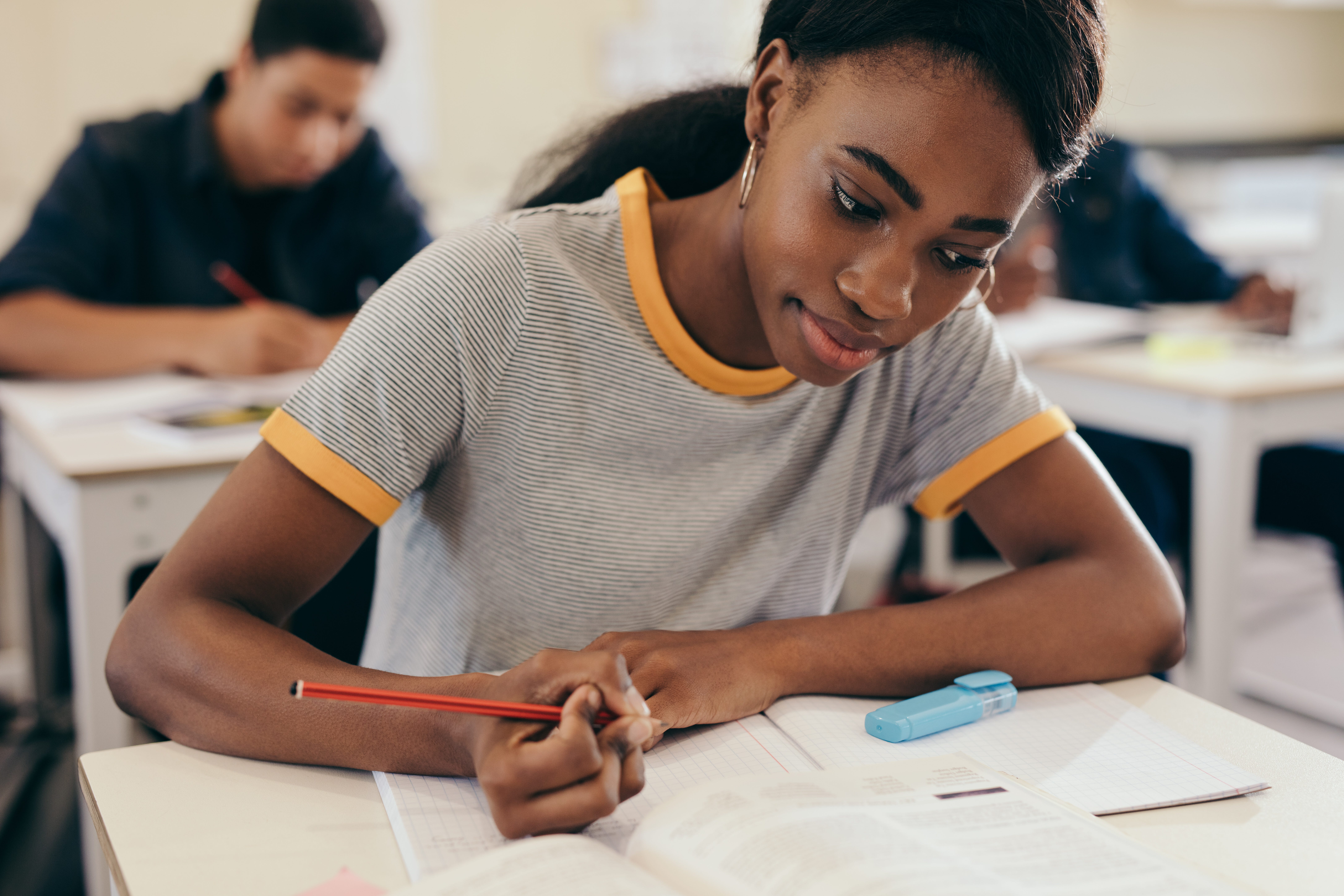
Early in my high school teaching career, I would give my World History students the worst assignment: a four-page paper on ancient American civilizations (e.g. the Olmecs). The students hated writing these papers, and I hated grading them. They were boring to grade because they were boring to write.
If I gave that assignment nowadays, most of the essays would be written by A.I. The students would learn nothing.
This relates to one objection to the A.I. Revolution: that it will sap our fundamental skills, like writing. Several great thinkers I’ve read that describe the problem. Here’s one.
From Antowan Batts writing in Decode Econ,
“Consider what happens when you always have a shortcut available. You’re writing an essay and get stuck on how to articulate a complex idea - do you struggle through it, building your ability to communicate nuanced thoughts? Or do you ask ChatGPT to phrase it for you? The latter is faster, often better, and requires zero cognitive strain. Do that enough time, and you never develop the skill at all.”
The concern here is about human capital, that is, the education, training, and experience needed to do sophisticated tasks. Boring work gets us the skill we need to get to the fun work. If A.I. slurps up all the boring work, we’ll never get to the good stuff. And it might also slurp up the intern’s meagre paycheck.
I’m a guarded A.I. optimist, so I’ll give a guardedly optimistic answer.
There are at least two paths out of this conundrum: One is by not ever gaining certain basic skills at all (and that’s ok). Another is by education.
First, there are some things that we just don’t need to know how to do. For example, interns shouldn’t ever have to learn data entry if they can help it. Professionals shouldn’t be formatting slide presentations. If machines can do all this, so much the better. This is uncontroversial.
There are also some skills that we might lament seeing go by the wayside. Perhaps mid-tier intellectual work such as generic pop songs or listicles will be entirely done by A.I. Same for some artwork. Some activities will become hobbies rather than paid work–most art is already in this category.1 As is this newsletter that you’re reading right now.
But for the basic skills that we do need, we can rely on school, specifically teachers. We already do this for many skills that can’t be developed on the job. Think about your math class: your math teacher had a math machine called a “calculator” – right there in the room – that could do all the calculations she was teaching you. You knew it. She knew it. And she knew that you knew that she knew it. But she kept right on teaching you how to do calculations. The nerve!
Maybe a brave soul would challenge her about this. And she would reply, “If you don’t know how to do the calculations, you won’t even know what to tell the calculator to do.” The brave soul (me) would harrumph and slump back into his chair, defeated yet defiant. But she was right.
If we don’t learn what input to give A.I., we won’t get good output.
What about the more enriching skills for which humans have a comparative advantage2 over machines? What about innovative artistic skill, teamwork, personal connection, and decision-making?
Batts (see above), despite making an A.I.-pessimist argument, gives us a way forward.
“Teachers are making what might seem like a backward move: they’re returning to traditional teaching methods that many had abandoned years ago…More in-class essays written by hand. Oral presentations replacing written reports. Process-focused grading where students must show their work at every stage. Teachers sit with students during brainstorming sessions to ensure the ideas are their own…The teachers’ retreat to traditional methods isn’t wrong. They’re protecting something precious: the irreplaceable experience of genuine learning. Of struggling with an idea until it clicks. Of building knowledge through effort rather than acquisition through prompts.”
Think back to the terrible essay I assigned my World History students. I figured out that the essay wasn’t teaching them much. (I was also desperate to read better essays.) Over time, I started to assign shorter papers and asked for more focused arguments from the students. I began to work with them on developing topics and theses. Students explained their ideas in small groups. Eventually I only assigned two-page papers, but they had to have their sources mapped out and diagrammed by hand, and the papers revised and reworked until the arguments in them were compelling and supported by data.
In short, I moved from making my students churn out soulless, information-heavy slop to making them think. It was hard to do, but it was worth it.
I began by treating my students as if they were A.I. bots, doing work that wasn’t worth doing. But I got better. I moved toward helping them learn authentic intellectual work.
Make no mistake: if teachers aren’t rediscovering low-tech, traditional methods, then students will absolutely use A.I. to replace skill development.
It will be hard work, but I think we can do it.
This newsletter is supported by the Virginia Council on Economic Education. Click to learn more about the various ways that VCEE supports teachers and students.

Some hobbies could also become paid work as a result of A.I., by reducing the costs of production and allowing specialists to focus on the work they do best, thus bringing new products to market. I’ll write about that later.
Comparative advantage is when one person (say, humans) can do certain work at a lower opportunity cost than someone else (say, a machine). Even if the machine is absolutely better at all tasks. That is, machines (A.I.) are at their most efficient when they specialize in certain tasks, leaving work available for humans. Here’s a great article on comparative advantage and A.I.
Thanks for sharing your views on AI and teaching. Also, we appreciate you reading Decode Econ.
The calculator analogy is spot on. We don't stop teaching long divison because calculators exist, and we shouldnt stop teaching writing because AI exists. The key insight here is that boring work builds the cognitive scaffold for the real work. If anything, AI forces educators to be more intentional about which skills are worth preserving and why. That's actually a healthy pressure.